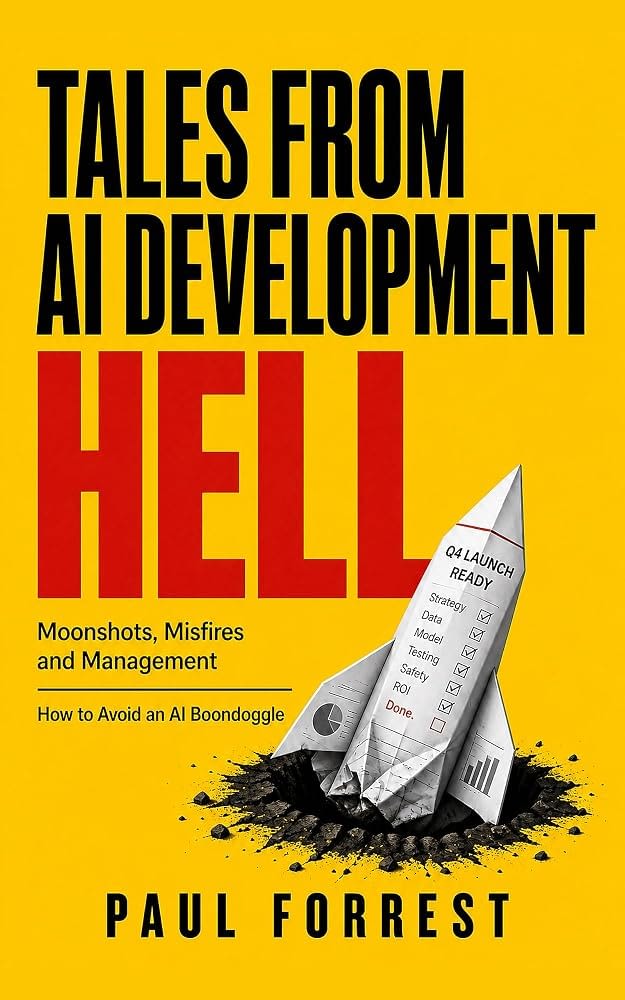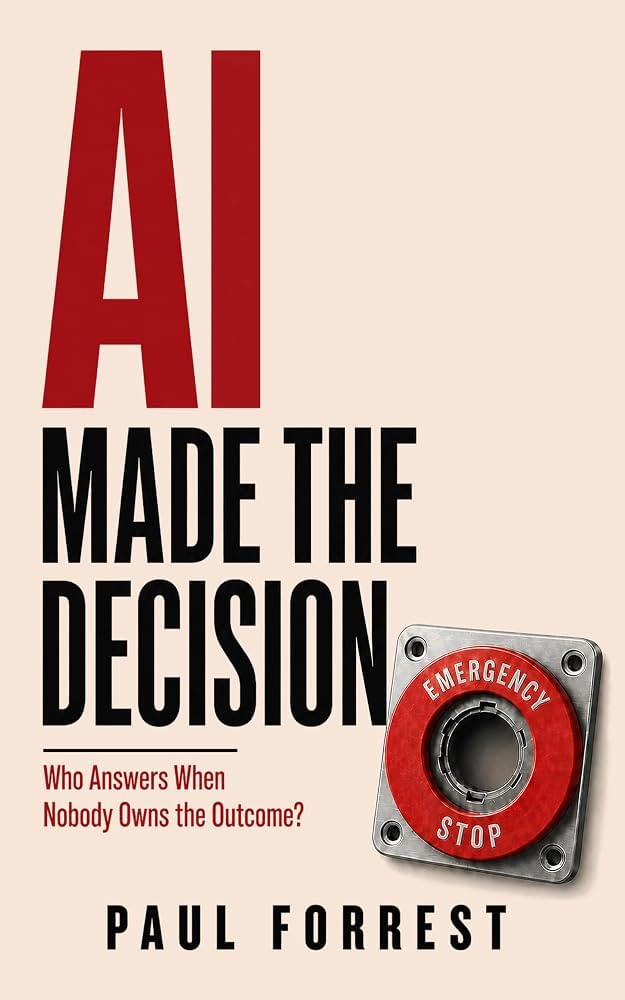
Nothing on this page constitutes legal advice. Legal advice sits outside the terms of an Ecaveo engagement, and the material here supports discussion and further review by qualified advisers.
Paul Forrest is available for non-executive director and board member appointments where artificial intelligence matters to the board. He brings AI governance capability to the boardroom, together with three decades of management consulting, board advisory and investment experience.
Boards rarely need a non-executive who can build models. What they need is someone who can tell whether management is governing AI properly, ask the questions a regulator, an investor or an acquirer will ask, and connect AI risk to strategy, capital and reputation.
What an AI-literate non-executive brings
- Independent challenge on AI strategy, spend and supplier dependency.
- Oversight of AI risk, including the EU AI Act, data protection, cyber security and accountability for automated decisions.
- Clear questions for management on agents, delegated authority and human oversight.
- Experience of funding rounds, exits, investment committees and fund boards.
Board experience
Paul has served as a non-executive director and board adviser to growing companies, chairs an investment fund and sits on the board of another. His writing on governance includes Delegated Authority, on what a board owes an AI agent before it acts, Who Decided This?, on accountability for automated decisions, and Cyber Risk in the Boardroom. Disloyal Boards? Think Again sets out his view of constructive dissent.
Appointments considered
Paul considers non-executive, independent director, committee and advisory board roles in private equity backed companies, scale-ups, professional services, financial services, technology and the creative industries. Where an executive role suits the organisation better, he also works as a fractional Chief AI Officer.
Frequently asked questions
Does a non-executive director need technical AI expertise?
Not usually. A board needs AI governance capability more than technical depth, meaning the ability to judge whether management has inventoried its AI use, classified the risk, named owners and kept evidence that a regulator or acquirer would accept.
What does an AI non-executive director do on a board?
The role provides independent challenge on AI strategy, investment and risk, helps the board set policy on automated decisions and agents, and makes sure AI appears on the risk register and committee agendas with clear ownership.
What is the difference between an advisory board member and a non-executive director?
A non-executive director is a statutory director with legal duties and a vote on the board. An advisory board member gives advice without those duties or that vote. Paul takes both kinds of role, and board adviser roles are described separately.
How do I approach Paul about a board appointment?
Contact Paul directly with a short description of the company, the role and the timetable, and he will say quickly whether there is a fit.
Book a conversation with Paul or read more about his background.